Why Are My Gutters Overflowing? 5 Florida Causes & How to Fix Them
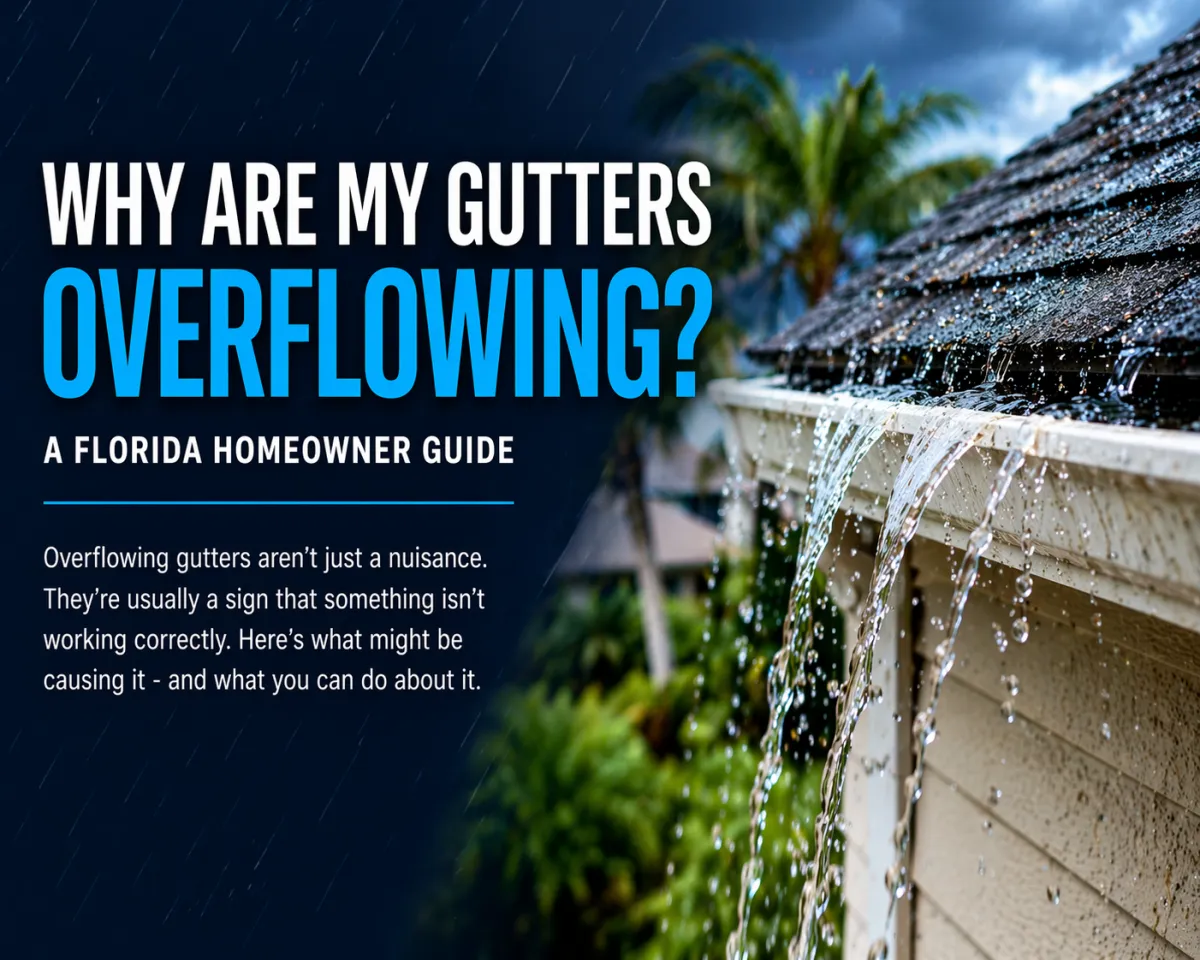
If you’ve ever watched water pour over the edge of your gutters during a Florida storm, you’re not alone. In places like Pinellas County and St. Petersburg, sudden downpours can overwhelm even newer systems — especially if something isn’t working properly.
Overflowing gutters aren’t just a nuisance. They’re often an early warning sign that your system isn’t handling water the way it should. The key is figuring out why it’s happening — and whether it’s something simple like maintenance or a bigger issue that requires a long-term fix.
The Most Common Reasons Gutters Overflow
1. Clogged Gutters from Debris
The most common cause of overflowing gutters is debris buildup. In Florida, palm fronds, leaves, roof granules, and dirt can collect quickly — especially after storms or windy conditions.
When that buildup blocks the flow of water, rain has nowhere to go and spills over the sides instead. In many cases, a professional gutter cleaning service is enough to restore proper drainage and prevent further issues.
2. Blocked or Backed-Up Downspouts
Even if your gutters appear clear, the issue may be inside the downspouts. Debris can get pushed deep into the system and create a blockage that’s not visible from above.
When water can’t exit through the downspouts, it backs up into the gutter system and eventually overflows at the edges — often during the heaviest part of a storm.
3. Gutters Are Undersized for Florida Rain
Florida storms can drop a large amount of water in a short period of time. If your home has smaller or outdated gutters, they may not be able to handle that volume — even if they’re clean.
Upgrading to a properly sized system, like 6-inch seamless gutters, allows water to move more efficiently and reduces the risk of overflow during heavy rainfall.
4. Improper Gutter Pitch
Gutters need a slight slope to guide water toward the downspouts. If they were installed incorrectly — or have shifted over time — water can pool in certain sections instead of draining properly.
This often leads to overflow in specific areas of the home, even if the rest of the system seems to be working fine.
5. Sagging or Damaged Gutters
Over time, gutters can begin to sag or pull away from the home due to worn fasteners, fascia damage, or general aging. When this happens, the system can’t maintain proper flow.
Instead of directing water away from your home, sagging gutters allow water to spill over the edges or collect in low spots.
Why This Happens More in Florida
Homes in Florida — especially in places like St. Petersburg and Pinellas Park — deal with unique conditions that put extra stress on gutter systems.
Heavy rainfall, high humidity, and frequent storms all contribute to faster debris buildup and more demanding drainage needs. Add in palm trees and coastal weather patterns, and it’s easy to see why gutters here require more attention than in other parts of the country.
All of this accelerates clogging and puts more stress on your gutter system than in other parts of the country.
Is It a Cleaning Issue or a Bigger Problem?
This is the most important question.
In many cases, overflowing gutters don’t mean you need a full replacement.
You May Need Repairs or Replacement If:
Gutters are sagging or separating
Multiple sections are leaking
Water pools in certain areas
The system is too small for your roofline
Problems keep coming back after cleaning
In these cases, a properly designed system will perform much better long-term.
If you're local, you can learn more about gutter installation in St. Petersburg or nearby areas to see what a properly designed system should look like.
What Happens If You Ignore Overflowing Gutters
Letting this go too long can lead to:
Foundation damage from pooling water
Fascia and soffit rot
Roofline deterioration
Landscape erosion
Mold and mildew growth
What starts as a small overflow problem can turn into a much more expensive repair if left untreated.
Final Thoughts
Overflowing gutters are among the most common issues Florida homeowners deal with — but they’re also among the most fixable.
In many cases, regular maintenance and cleaning are all it takes. But when the system itself is the problem, upgrading to properly sized, seamless gutters can protect your home long-term.
If you’re unsure what your home needs, starting with an inspection or cleaning is usually the best first step.
